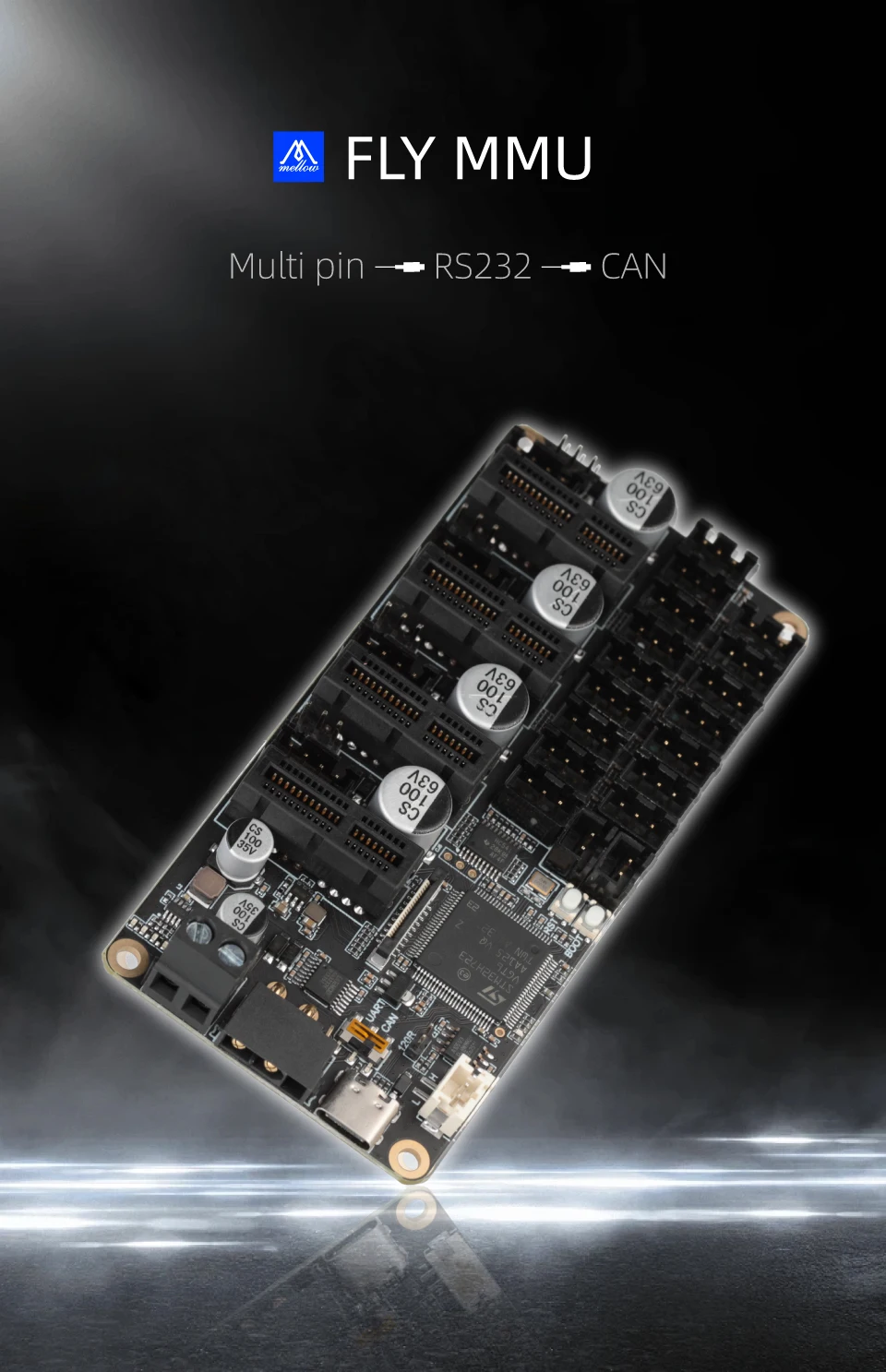
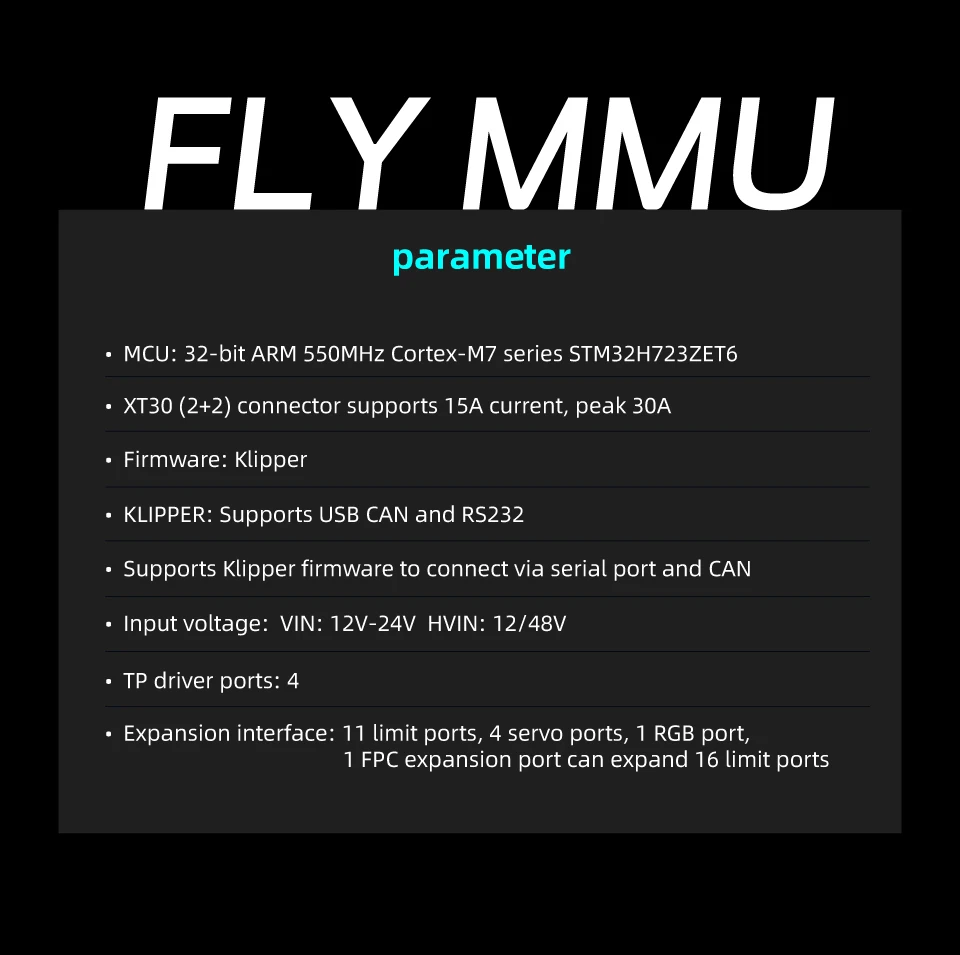
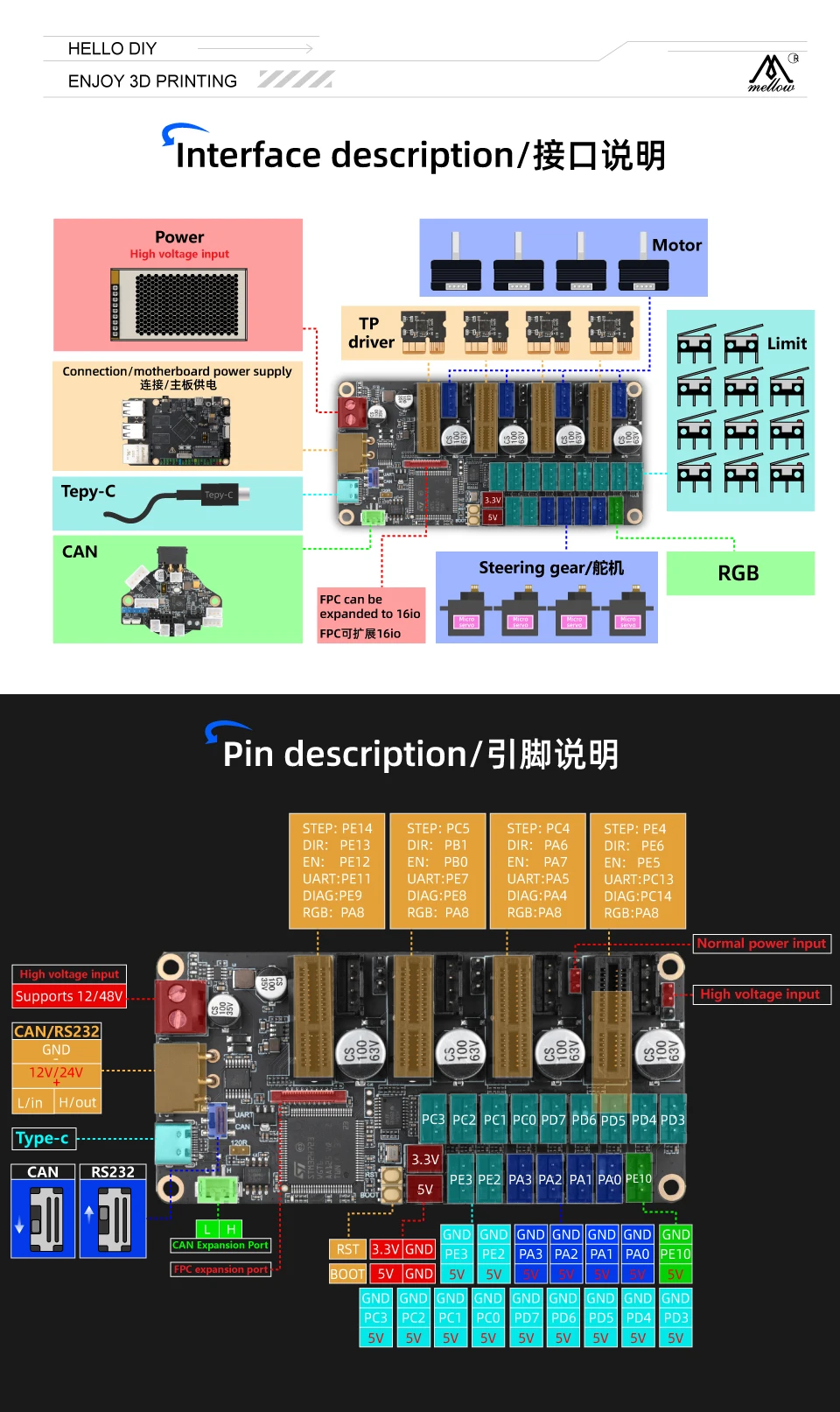
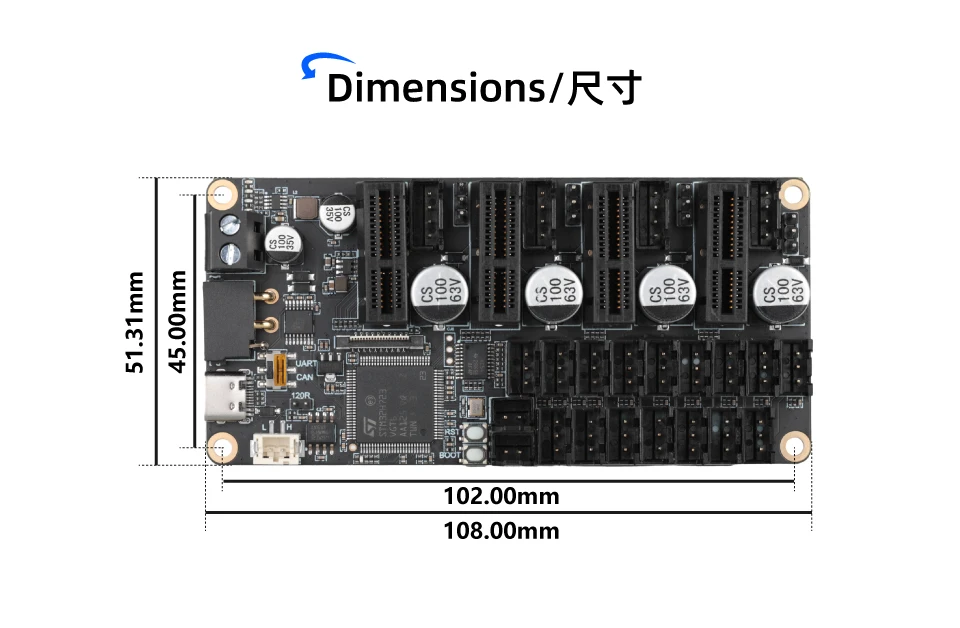
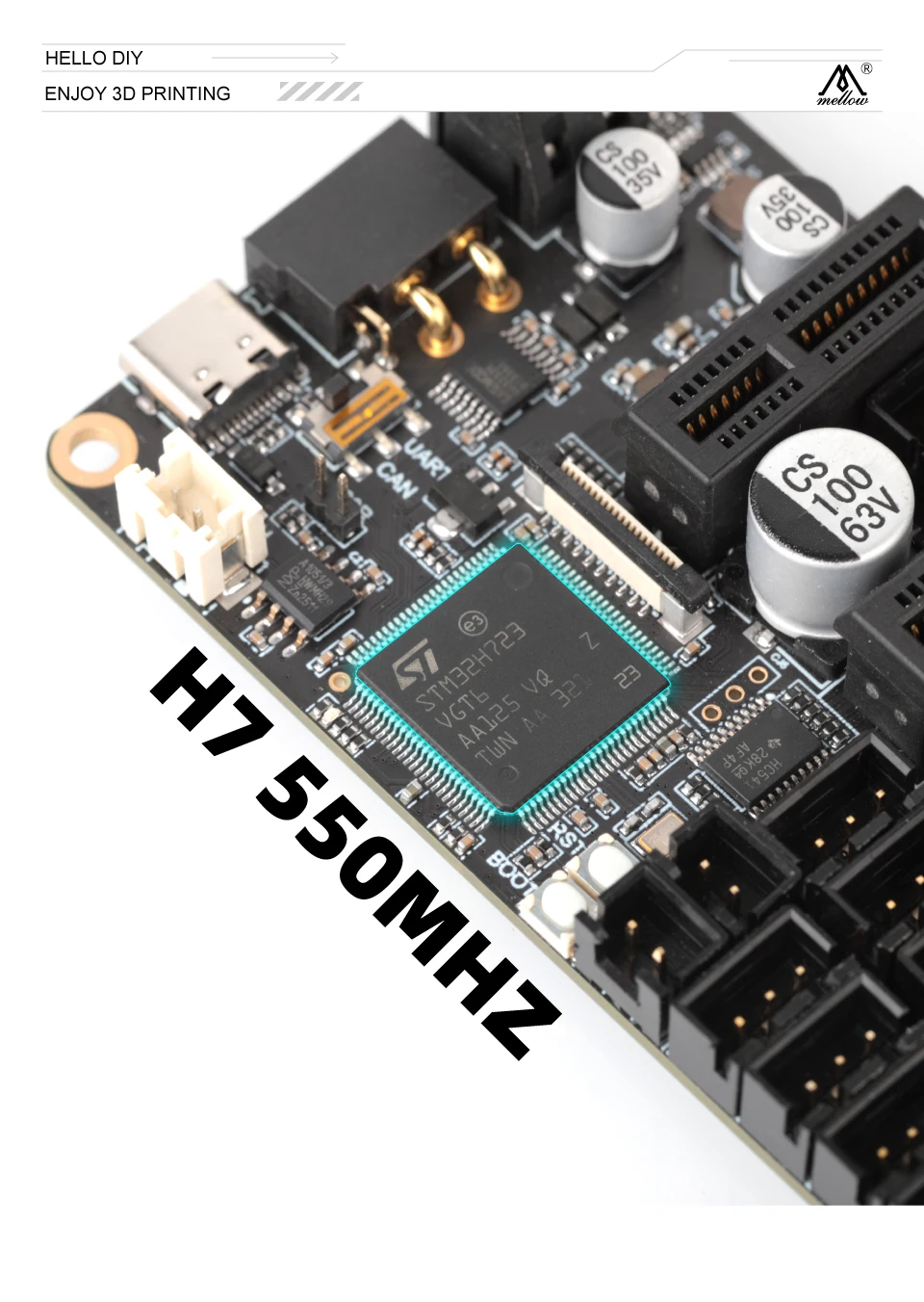
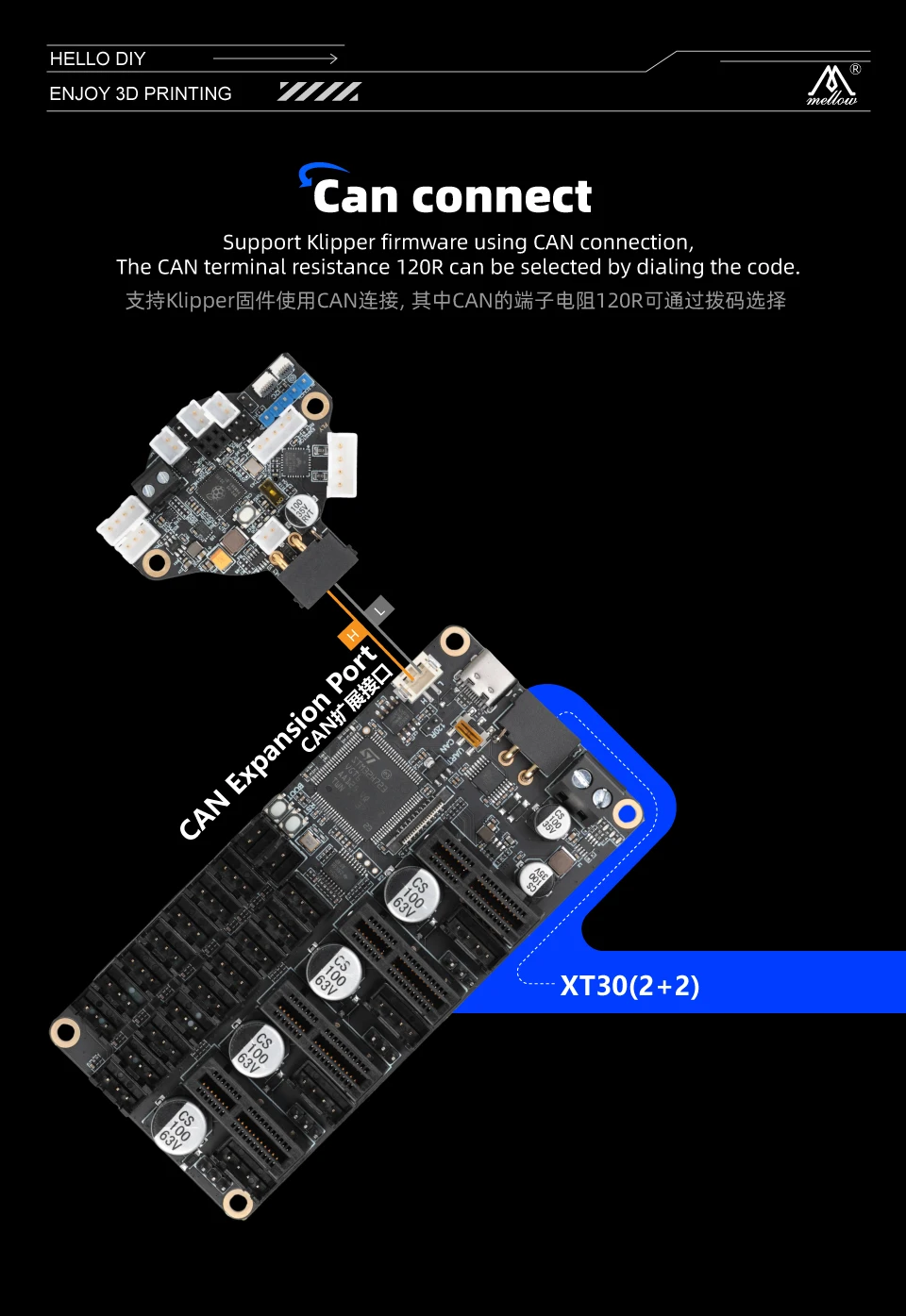
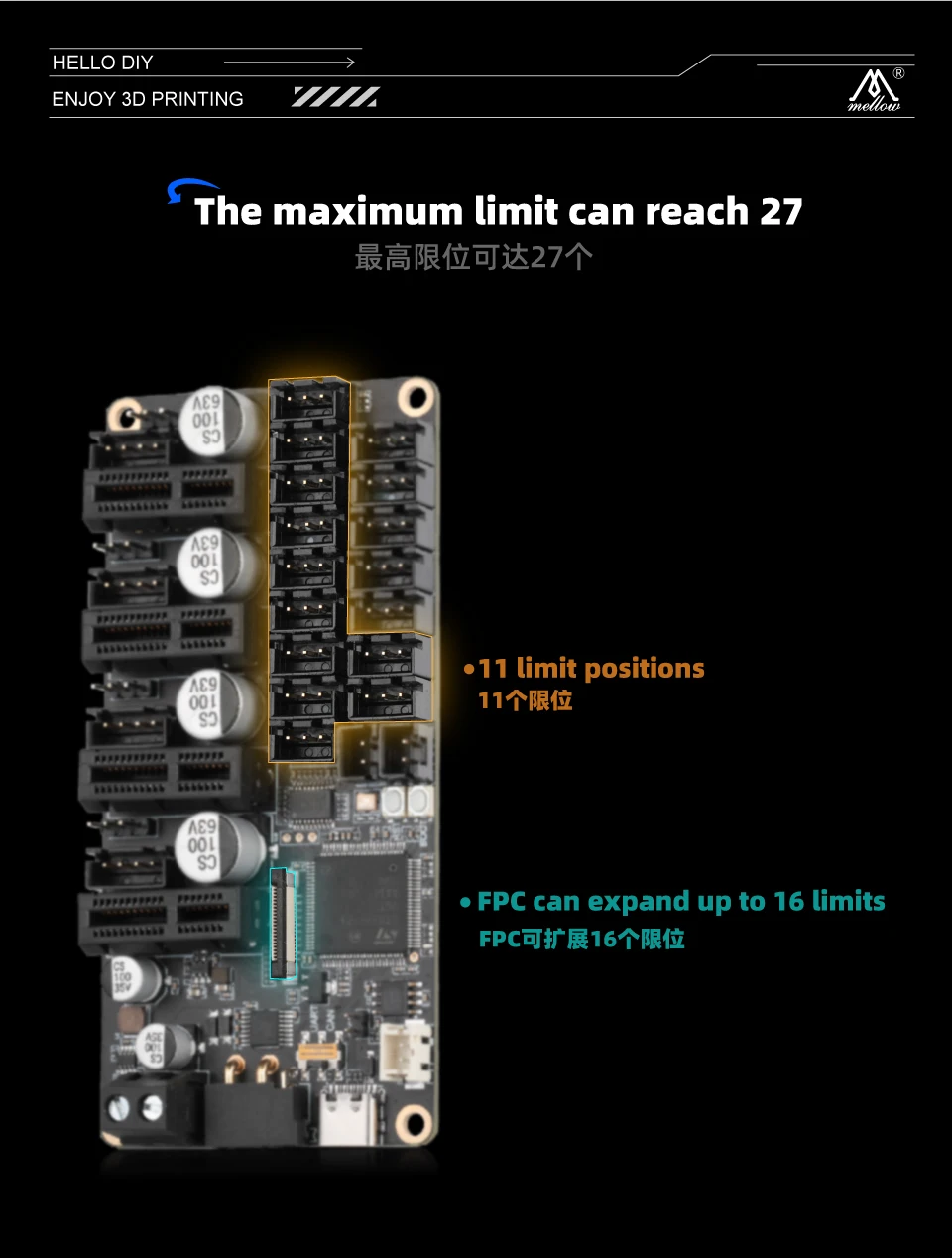
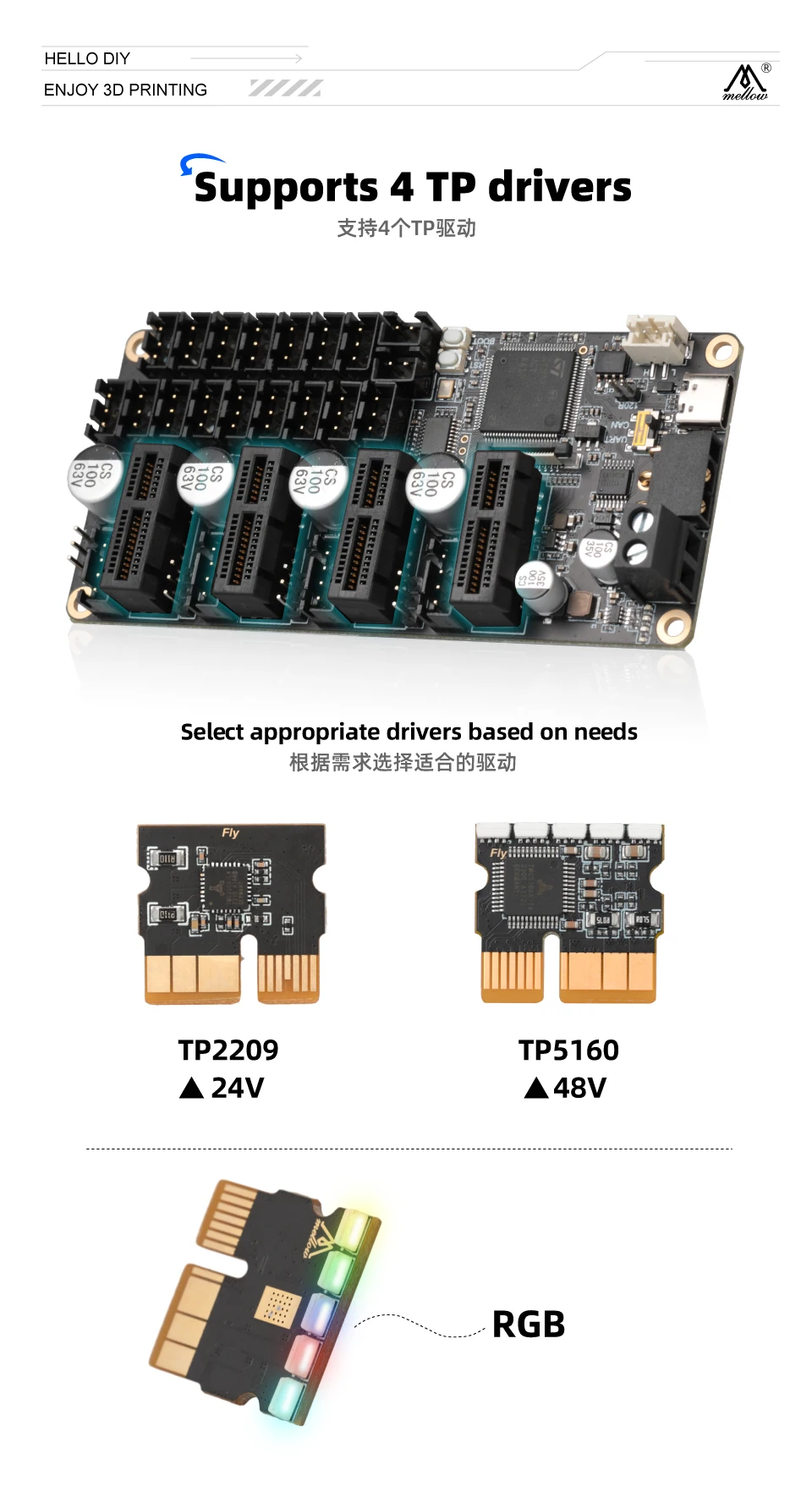
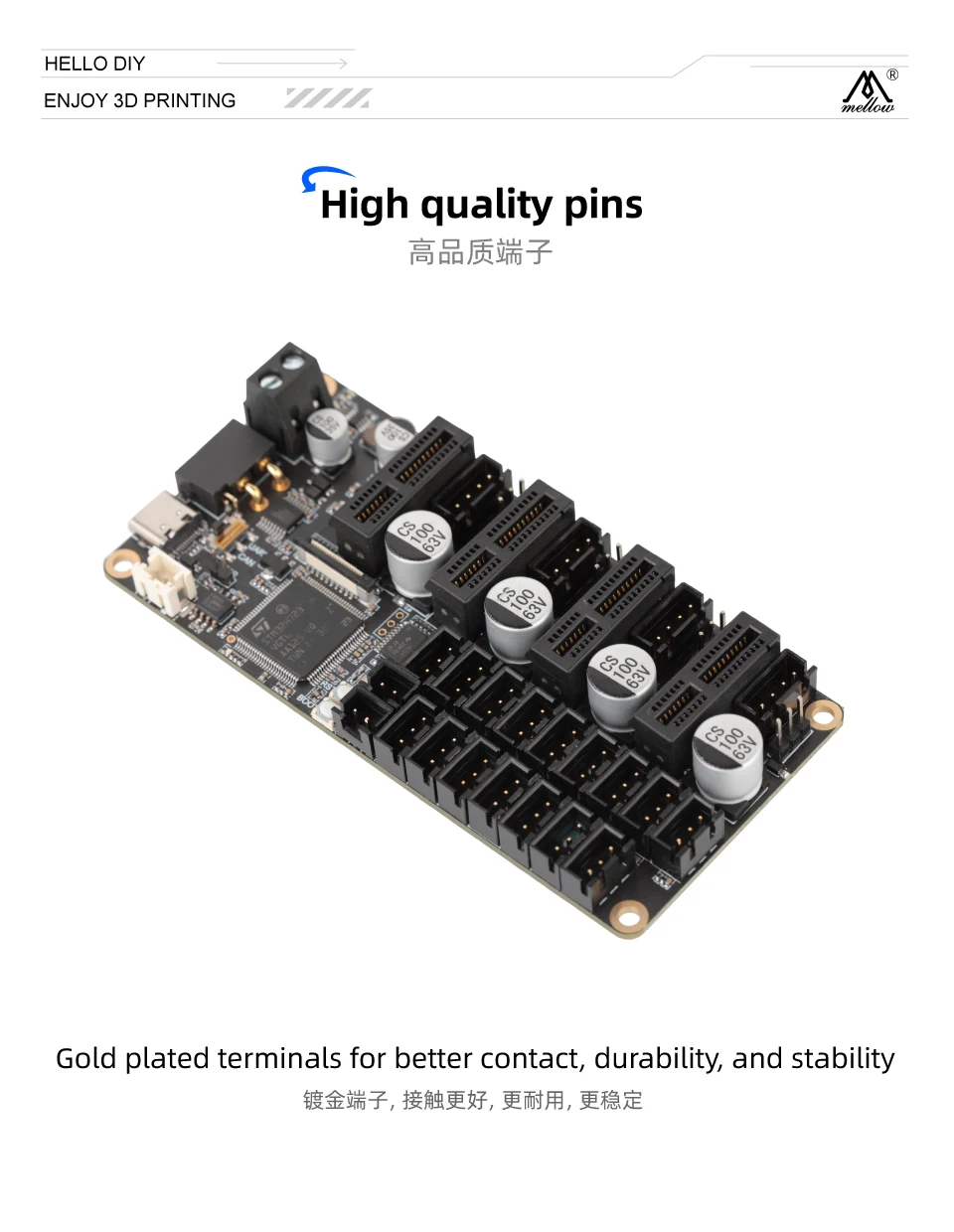
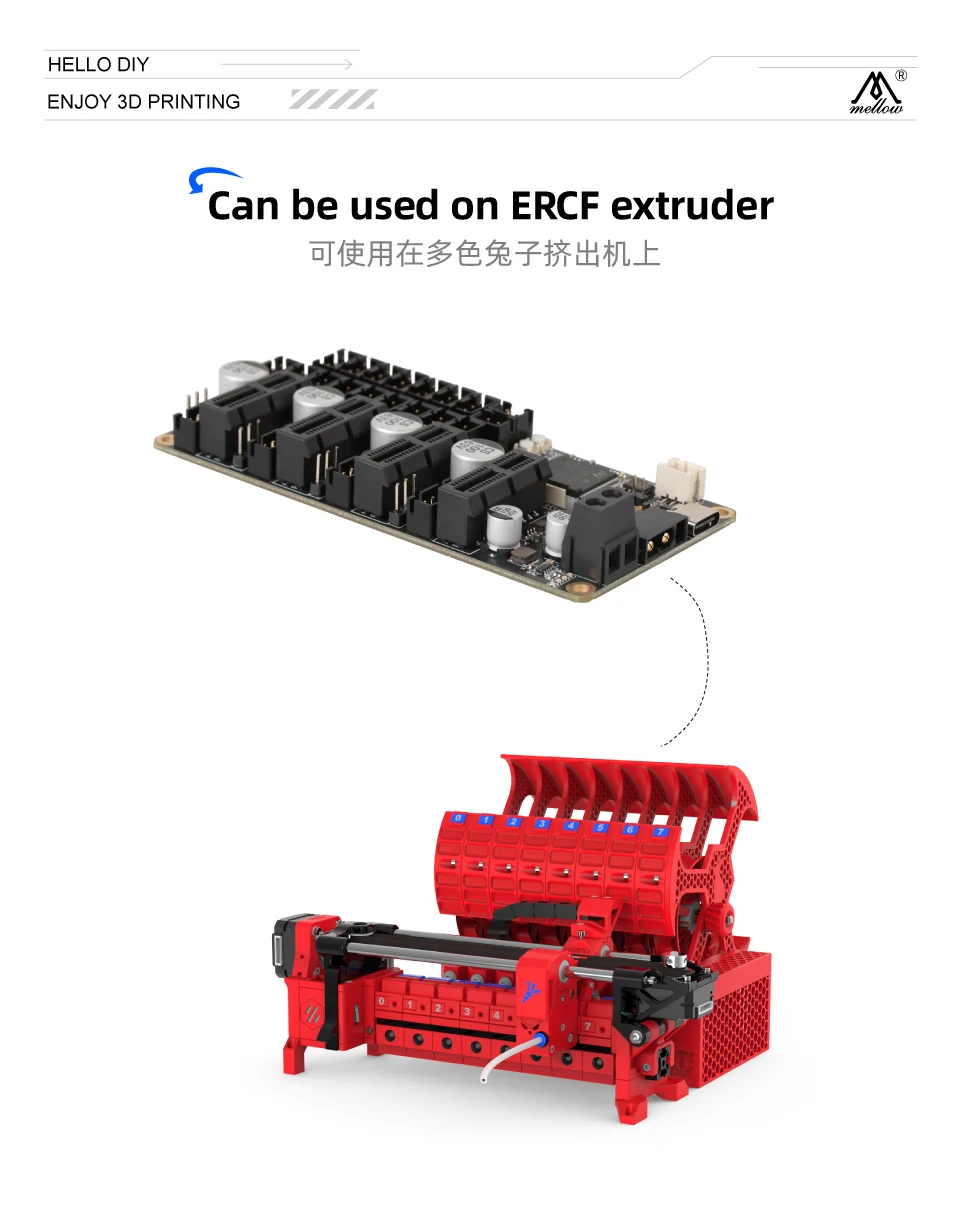
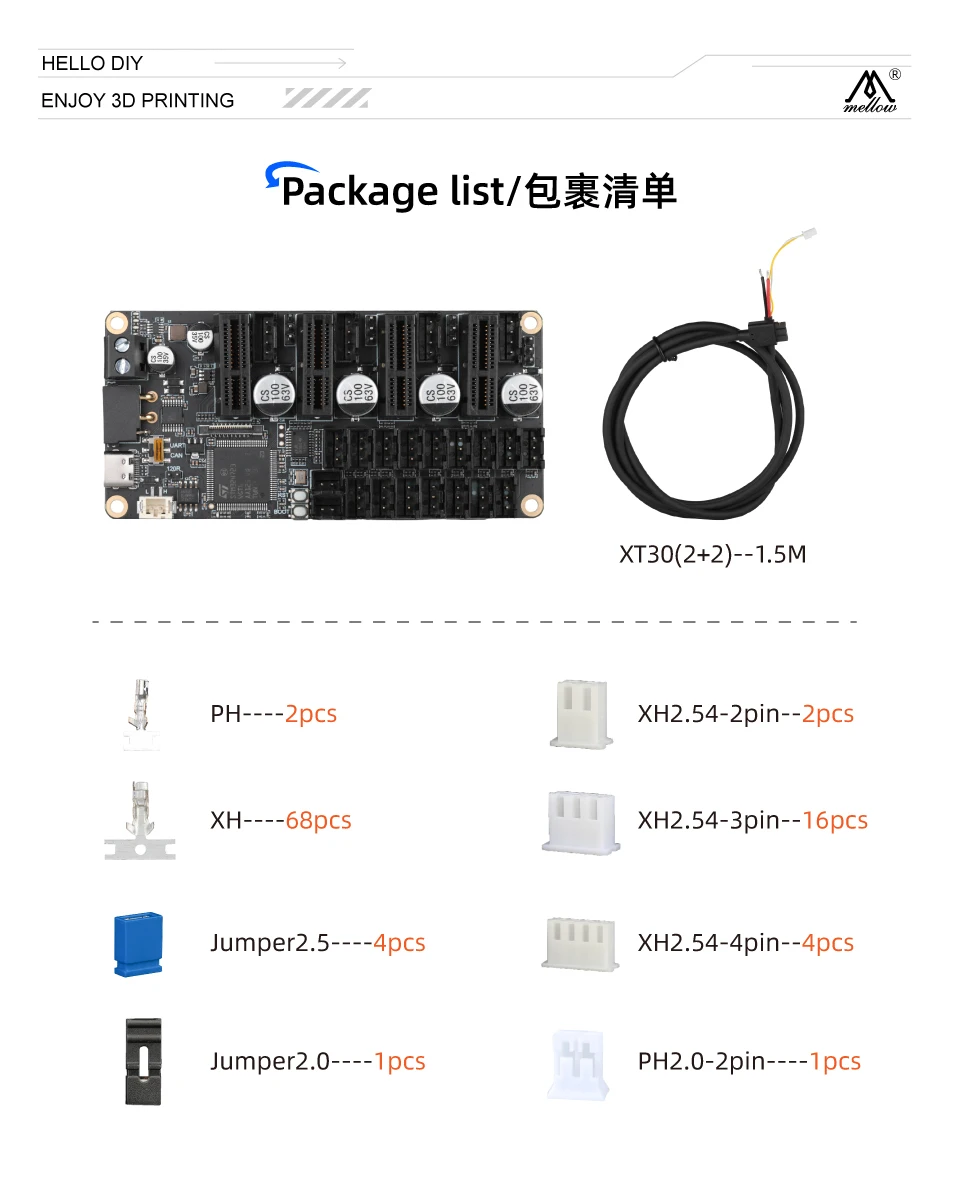
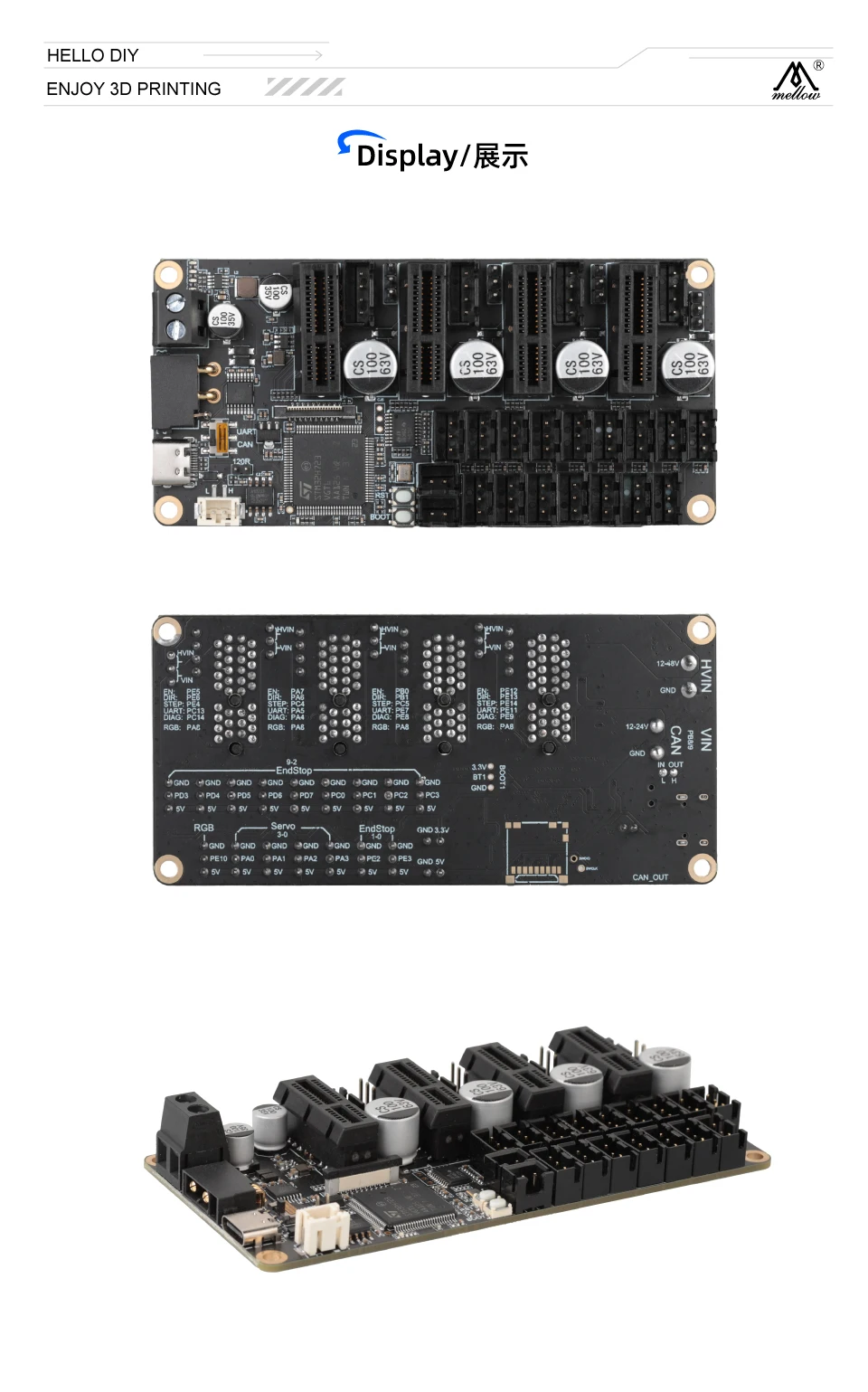
The Fly-MMU is a high-performance multifunctional toolboard tailored for multi-color printing in 3D printers and automation systems. It features an integrated, robust 550MHz H723 microcontroller that accommodates up to four TMC stepper motor drivers, all while supporting a 48V high-voltage drive system. The board natively incorporates 11 limit switch inputs and allows for expansion through FPC to add an extra 16 limit switches, along with offering four servo control outputs. Designed to be compatible with Klipper firmware, this toolboard also presents CAN bus and RS232 connection options to facilitate versatile communication and control strategies.
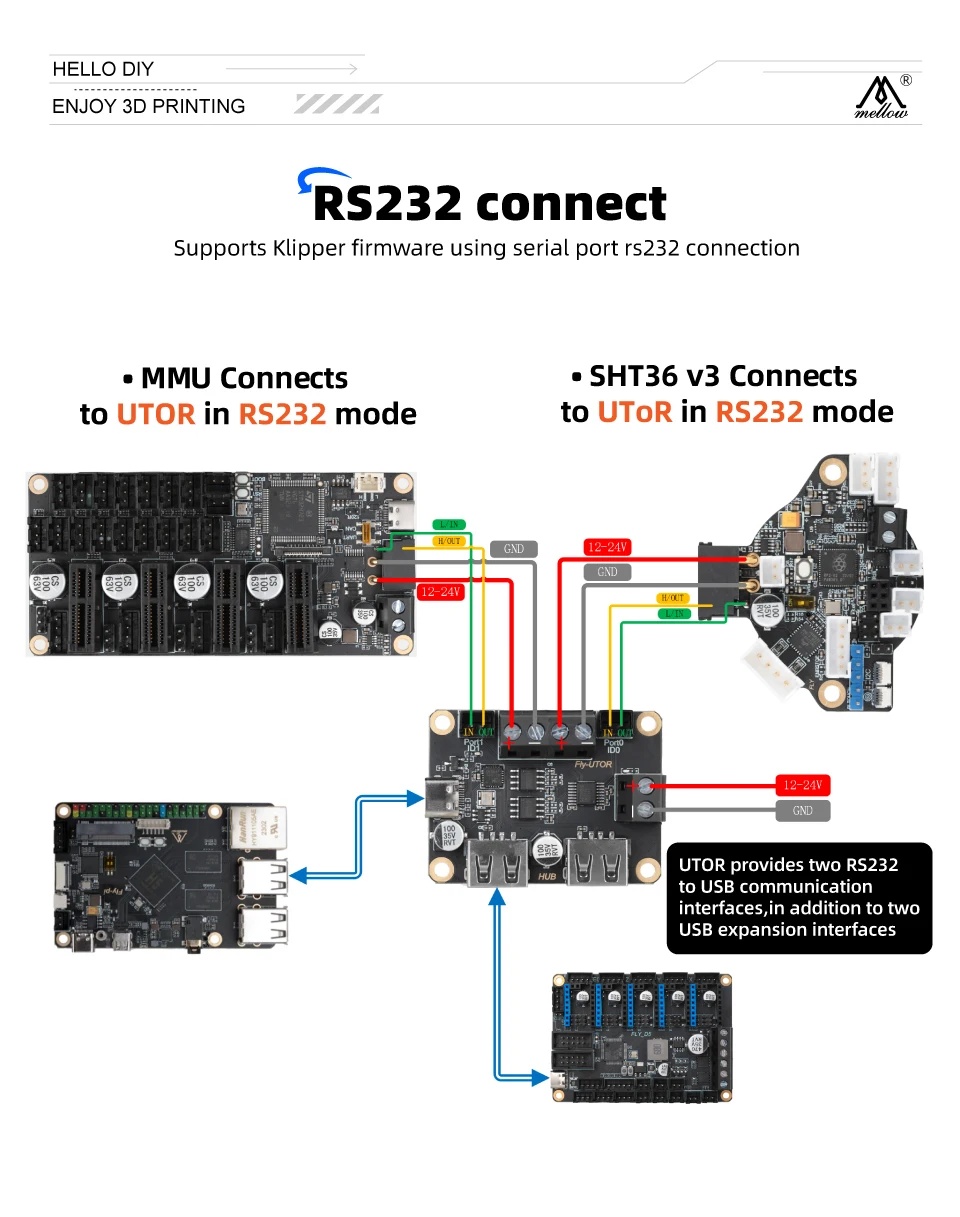
In the course of developing CAN toolboards for 3D printers over the past two years, we have observed that despite its widespread use, there exists a probability that CAN communication under the Klipper firmware might experience disconnections, leading to print failures. To address this reliability issue and enhance efficiency, we have decided to experiment with RS232 serial communication technology.
The current implementation of CAN communication in Klipper operates akin to a one-way street, where simultaneous sending and receiving of information is not supported; instead, it requires completion of either transmission or reception before proceeding to the next step. This arrangement can lead to data latency and accumulation, placing an increased processing burden on the microcontroller (MCU).
Consequently, RS232 interface has emerged as a promising alternative due to its inherent full-duplex capability. Just as a two-way road allows traffic to flow in both directions simultaneously, RS232 enables multiple devices to send and receive data at the same time, effectively preventing data congestion and reducing strain on the MCU.
Our preliminary tests have shown that RS232 communication delivers stable performance on 3D printers. This innovative attempt not only improves communication performance but also charts a new direction for the future design and development of toolboards, aimed at optimizing the overall communication architecture and ensuring more efficient and reliable operation of the equipment.
In the course of developing CAN toolboards for 3D printers over the past two years, we have observed that despite its widespread use, there exists a probability that CAN communication under the Klipper firmware might experience disconnections, leading to print failures. To address this reliability issue and enhance efficiency, we have decided to experiment with RS232 serial communication technology.
The current implementation of CAN communication in Klipper operates akin to a one-way street, where simultaneous sending and receiving of information is not supported; instead, it requires completion of either transmission or reception before proceeding to the next step. This arrangement can lead to data latency and accumulation, placing an increased processing burden on the microcontroller (MCU).
Consequently, RS232 interface has emerged as a promising alternative due to its inherent full-duplex capability. Just as a two-way road allows traffic to flow in both directions simultaneously, RS232 enables multiple devices to send and receive data at the same time, effectively preventing data congestion and reducing strain on the MCU.
Our preliminary tests have shown that RS232 communication delivers stable performance on 3D printers. This innovative attempt not only improves communication performance but also charts a new direction for the future design and development of toolboards, aimed at optimizing the overall communication architecture and ensuring more efficient and reliable operation of the equipment.
For installation instructions please see:http://mellow.klipper.cn/#/board/fly_mmu/README
MMU should not use high current servos
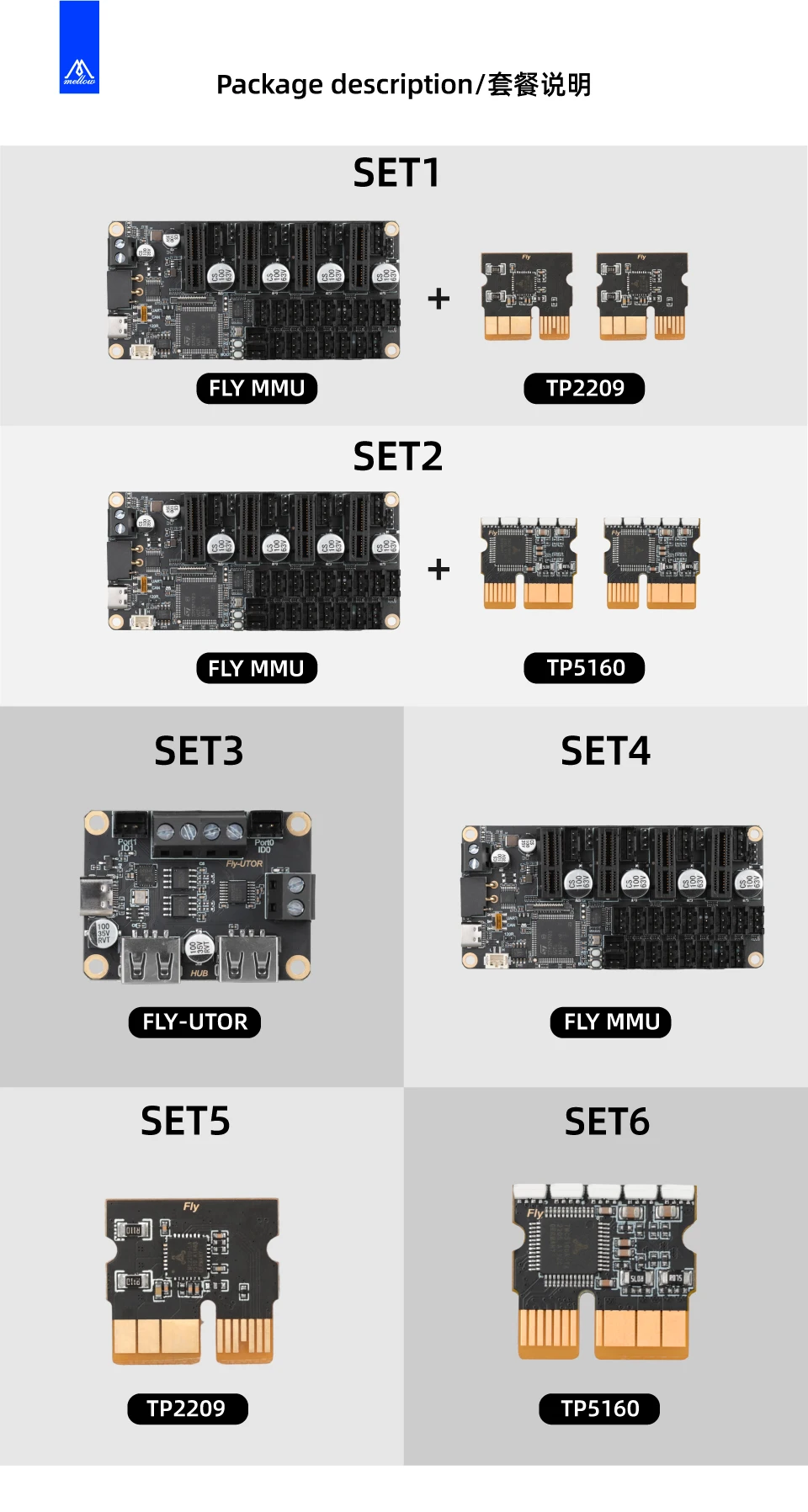
Package:
Set1:
Fly MMU V1.0 Board*1
TP2209*2
Set2:
TP5*160*2
Set3:
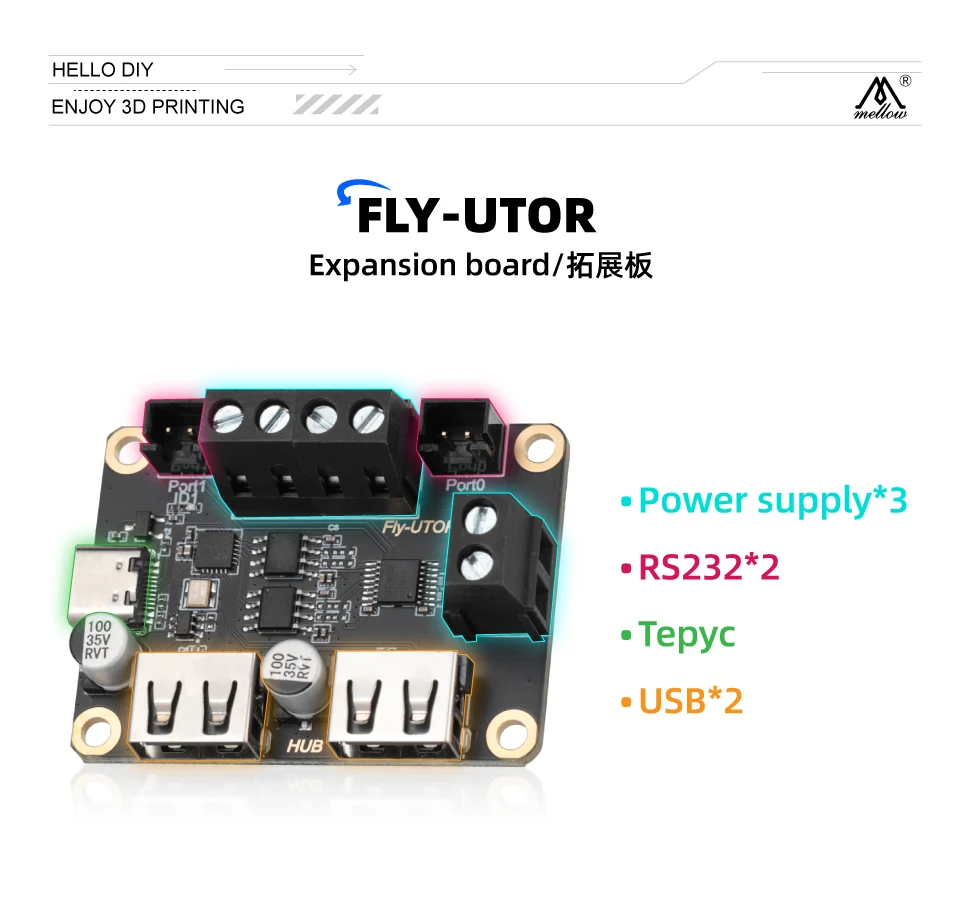
UTOR V1.0 For 232 Board*1